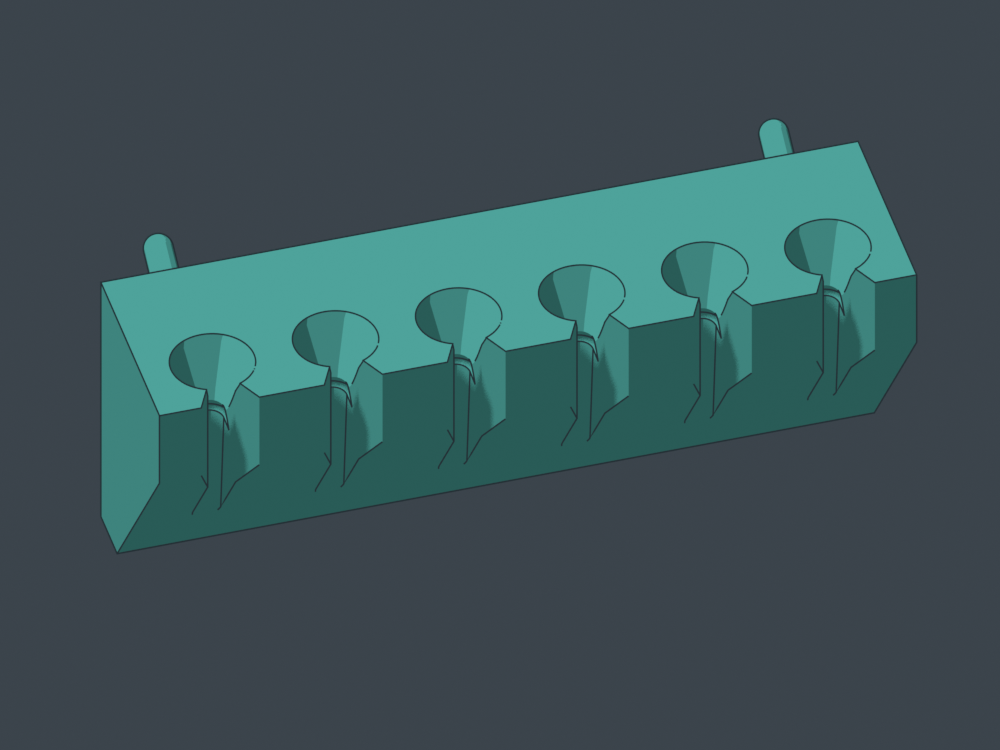
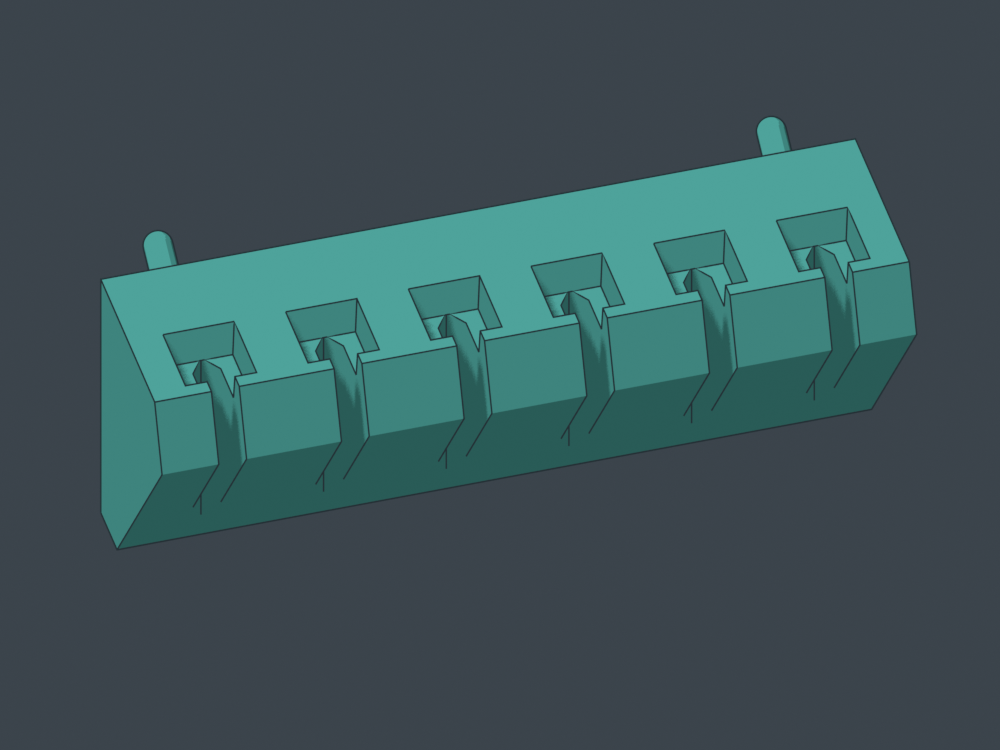
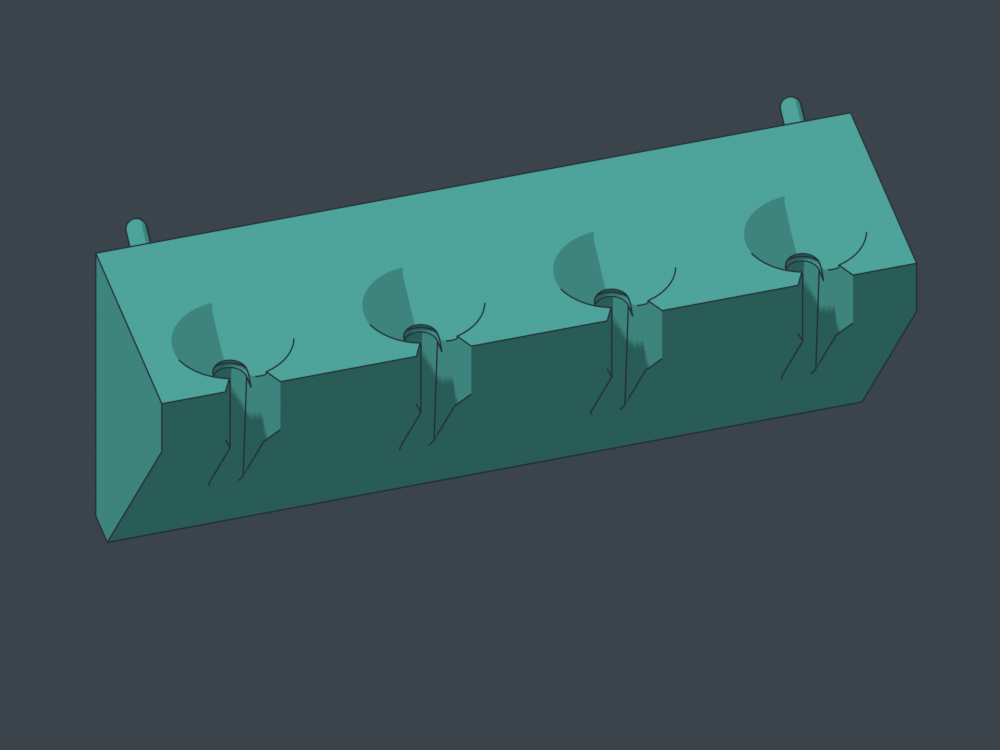
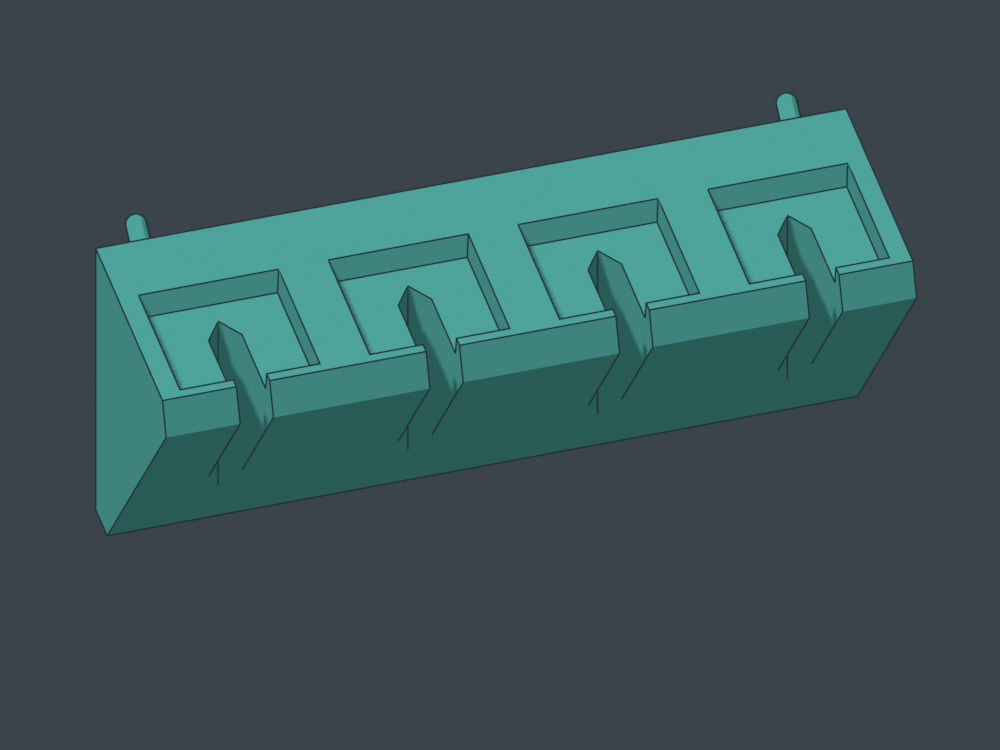
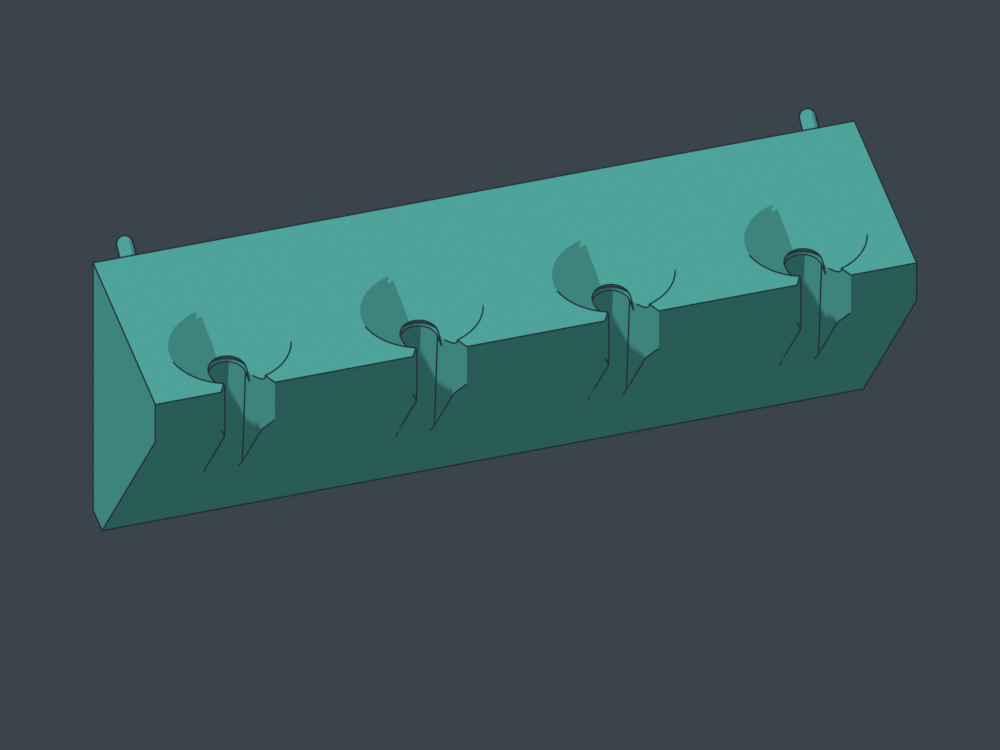
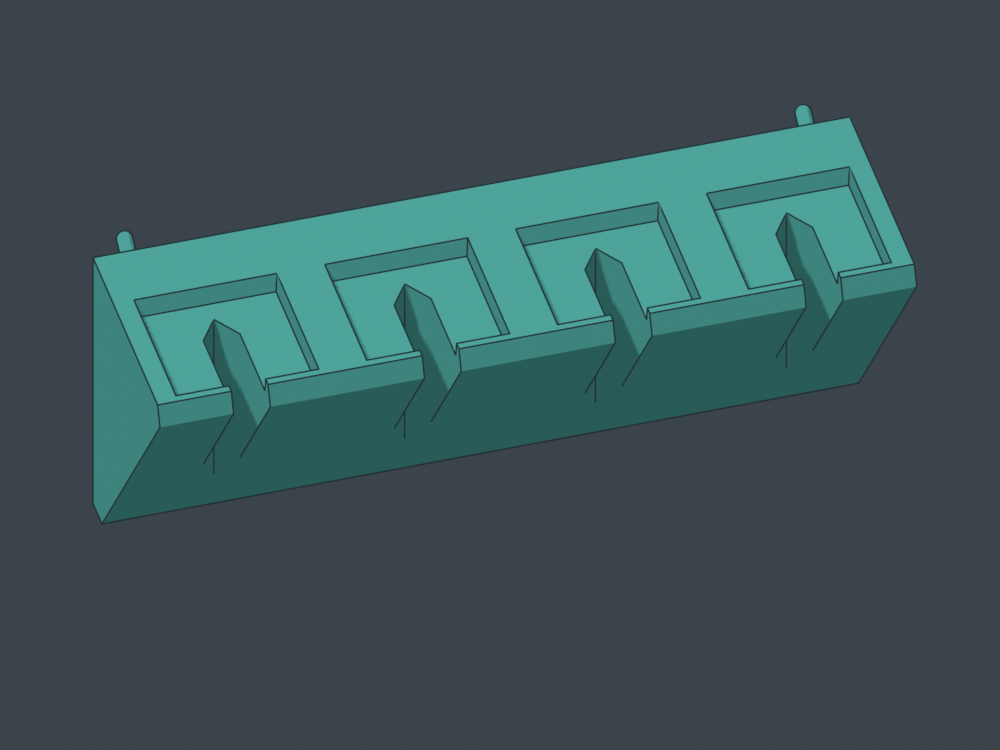
Zero support extrusion in all four Orca slices. Flat-seat form trial; backward rocking remains possible, especially with undersized handles.
A stays intact. B replaces the conical seats with shallow square recesses and broad flat bearing floors. The shaft slots remain open at the front. Tool counts, spacing, inch-grid widths and current tight pegs are retained.
B holds the modeled flat-ended handles vertically. A retains its 5° lean. A 14 mm lift clears the B rim for forward withdrawal. Backward rocking about the rear heel first met the holder at 28.0° for the nominal flat handle; smaller handles move farther. This is not an anti-tip lock.
Rotate B in its print pose
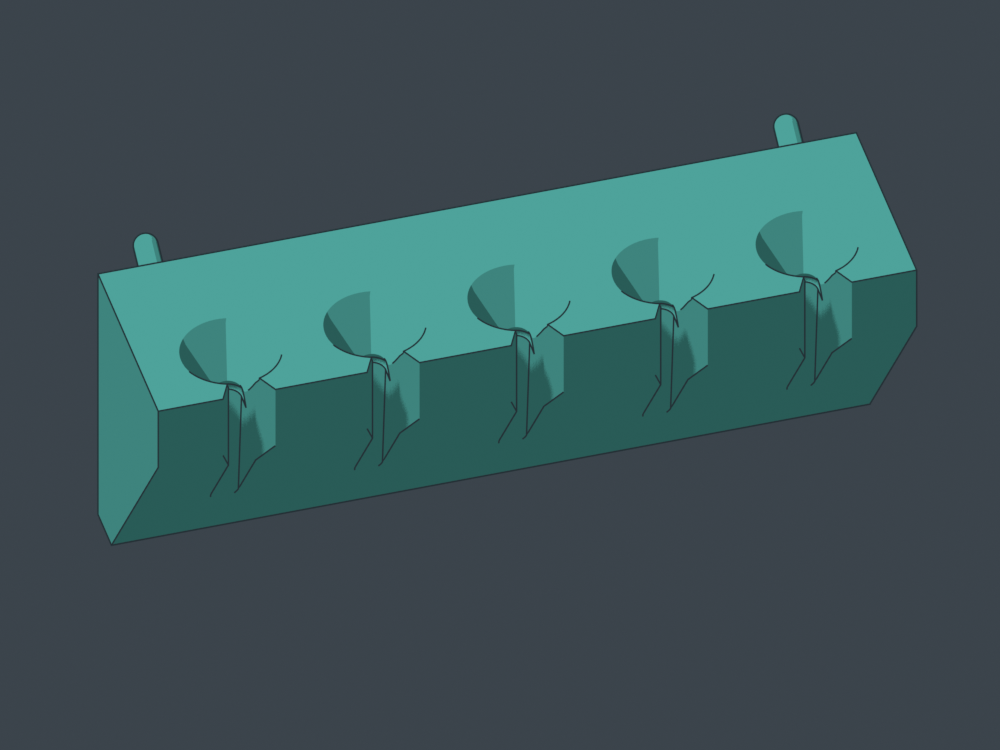
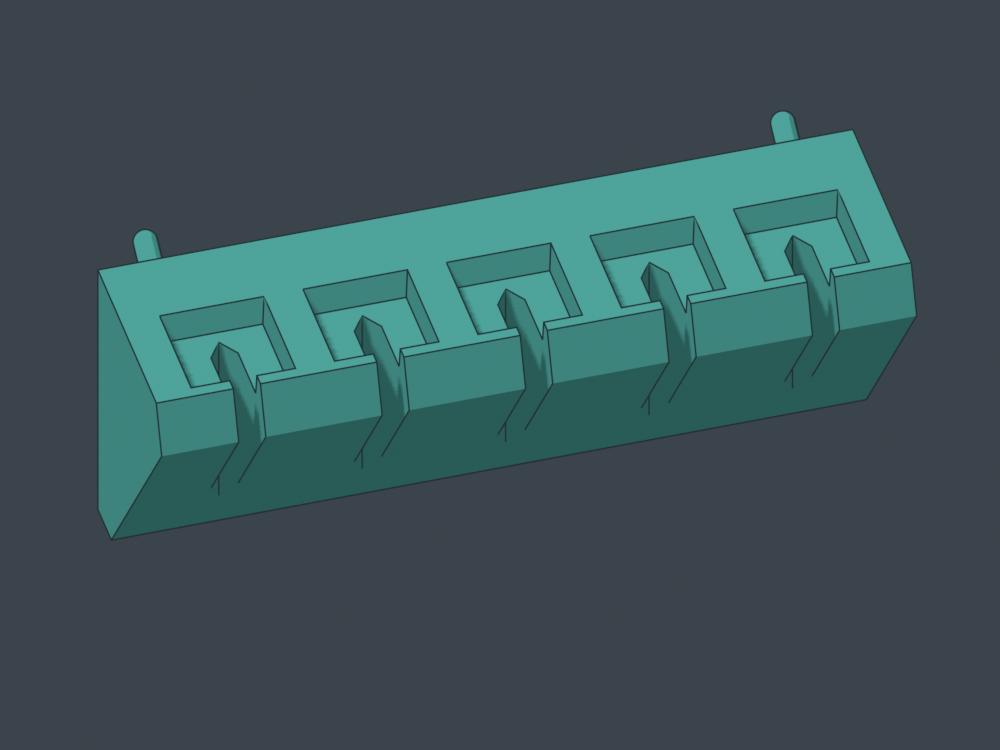
SD02 · Precision drivers
5 drivers / 6 cells · 150.4 mm wide · nominal handle Ø18 mm
B holds the modeled flat-ended handles vertically. A retains its 5° lean. A 14 mm lift clears the B rim for forward withdrawal. Backward rocking about the rear heel first met the holder at 27.5° for the nominal flat handle; smaller handles move farther. This is not an anti-tip lock.
Rotate B in its print pose
SD03 · Standard drivers
4 drivers / 7 cells · 175.8 mm wide · nominal handle Ø30 mm
B holds the modeled flat-ended handles vertically. A retains its 5° lean. A 14 mm lift clears the B rim for forward withdrawal. Backward rocking about the rear heel first met the holder at 27.5° for the nominal flat handle; smaller handles move farther. This is not an anti-tip lock.
Rotate B in its print pose
SD04 · Large Craftsman drivers
4 drivers / 9 cells · 226.6 mm wide · nominal handle Ø40 mm
B holds the modeled flat-ended handles vertically. A retains its 5° lean. A 14 mm lift clears the B rim for forward withdrawal. Backward rocking about the rear heel first met the holder at 27.5° for the nominal flat handle; smaller handles move farther. This is not an anti-tip lock.
Rotate B in its print pose
Four racks, zero support extrusion
Each B rests on its 55° diagonal underside. Actual Orca slices generate zero supports with automatic supports enabled at 50°, internal support allowed, bridge exemption disabled, and no raft or brim. All four also pass the sampled layer-start check. The original separate tip floors are unchanged and are outside this support-free claim.
Flat-seat experiment, not universal anti-tip retention.
The backward-rock check now uses the correct direction: handle toward the board, shaft toward you. Nominal flat handles first hit the holder at about 28°; undersized handles move farther, and one 28 mm handle in the 40 mm seat remained clear through 60° with 0.5 mm lift. The flat floor is a more direct bearing surface, but the low rim does not positively arrest rocking early. Rounded or mismatched shoulders remain unqualified.
What is checked
Valid single-solid STEP bodies, closed STL meshes, unchanged canonical pegs, chosen bed plane at Z=0, all 19 nominal grasp and removal paths, deliberate bearing, forward-slide interception, backward-rock probes, full-surface angle screening and actual Orca extrusion. Tiny fixed-peg facets total less than 0.002 mm² below the 49.5° screen; Orca produces no support for them.
No physical print yet. The inherited PETG review profile reports a bed-temperature warning, so no G-code or ready-to-print profile is offered. Use your calibrated filament settings for a trial. CAD/renders are downloadable; provisional Craftsman handle sizes remain assumptions.