Solder station WIP: seven separate modules, with the v7 full-height tweezer mount. The older v6 tweezer slice does not qualify the revised mounting. Physical fit and daily-use feedback remain part of development.
← Bench collectionB6 · seven separate mounts · tighter peg fit throughout
A solder station built around its print faces.
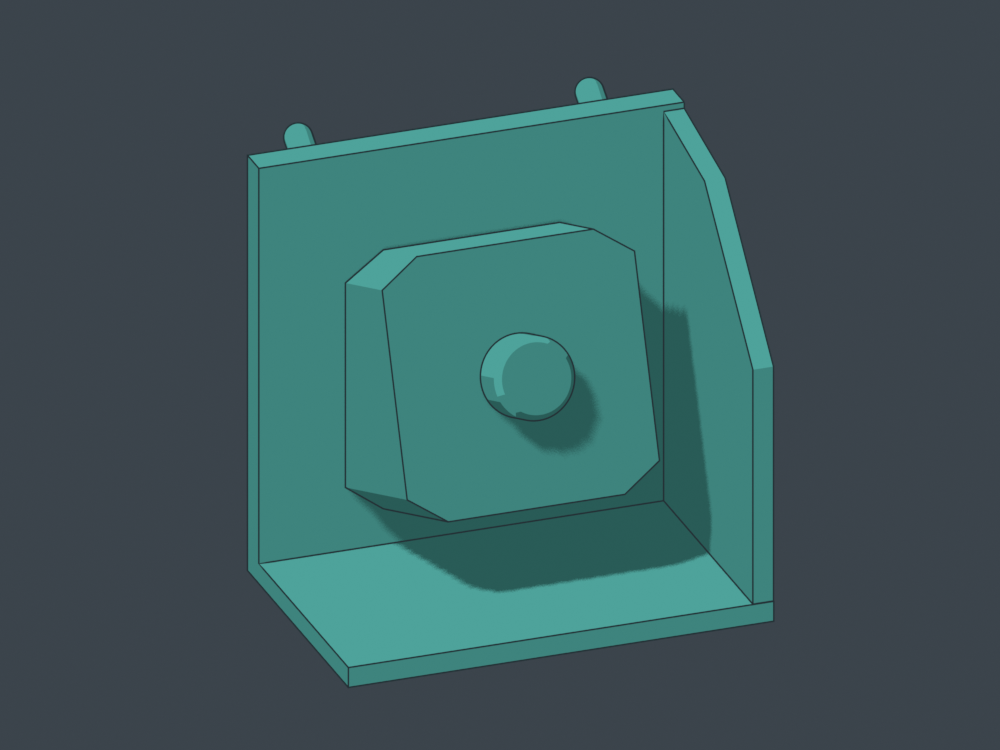
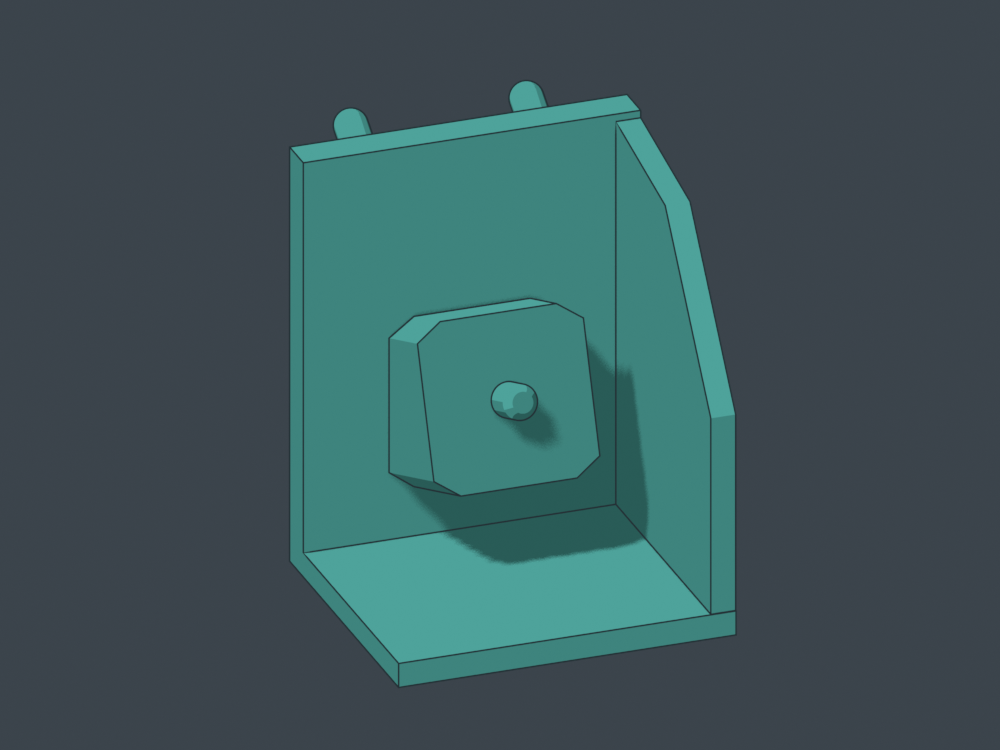
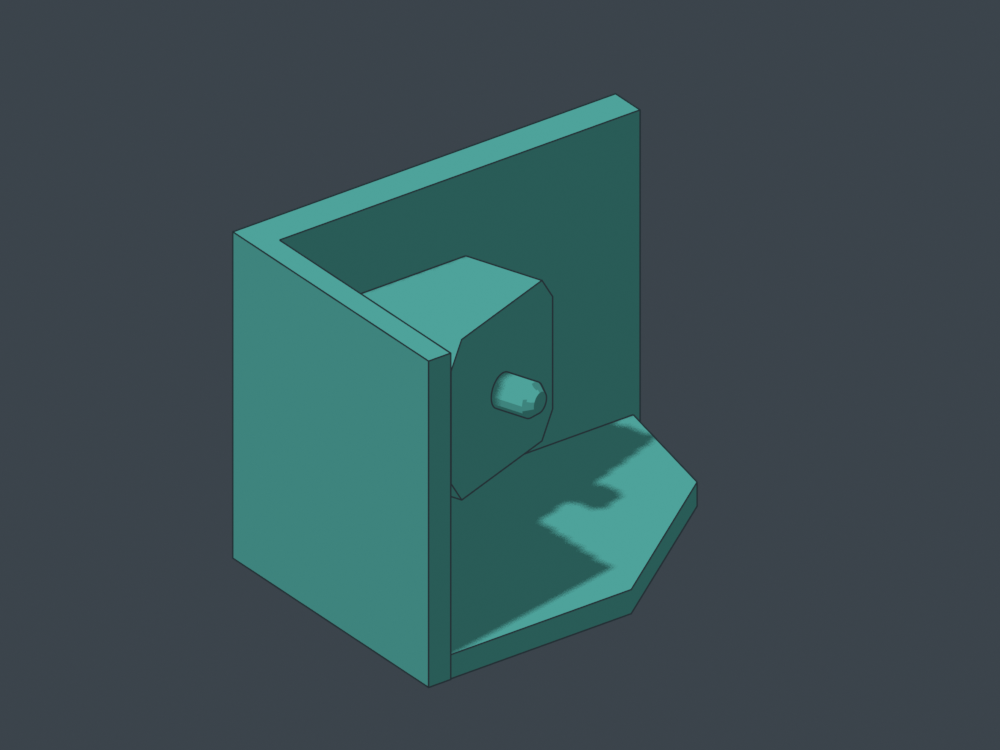
Tweezer mount updated to v7 after physical rocking feedback. Loaded assembly views below retain the earlier mounting backs; use the v7 individual download and rear view. Earlier slice evidence applies only to the other six modules.
The same tools and independent access, split into seven pieces on the one-inch grid. Overall mounting span: 302.8 mm. Barrel and tray modules stand on their bases; the narrower tool and reel modules print on their right cheeks.
All seven rear interfaces match rear-tongue-3p80-interference0p05: nominal 0.05 mm interference at 3.80 mm board thickness. This relies on plastic/board compliance. All mounted gallery downloads now use this shared fit.
Print review: all seven slice in Orca on the P1S 0.4 mm profile without mesh repairs. Supports remain under pegs, short guide lips and some curved features; inspect the amber toolpaths below. The barrel rack has the most support, about 15.6 g. The inherited PETG profile raises a bed-temperature warning, so machine G-code is not included. Use your verified material settings. Physical surface finish and fit remain to be tried.
The barrel grips remain exposed between short bearings. Each tool has a checked lift-and-depart path with its neighbors present. Tweezers lift along their slope and leave through the open left side. The liner lifts 13 mm, then slides forward below the stored nozzles. These checks use the existing planning tools, not new measurements.
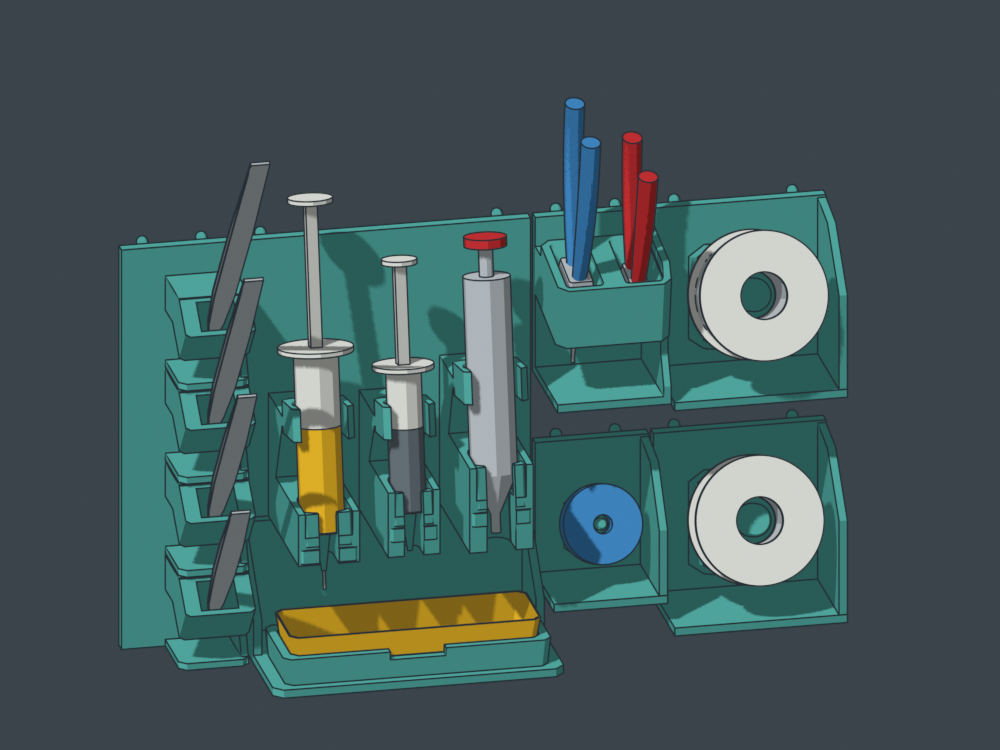
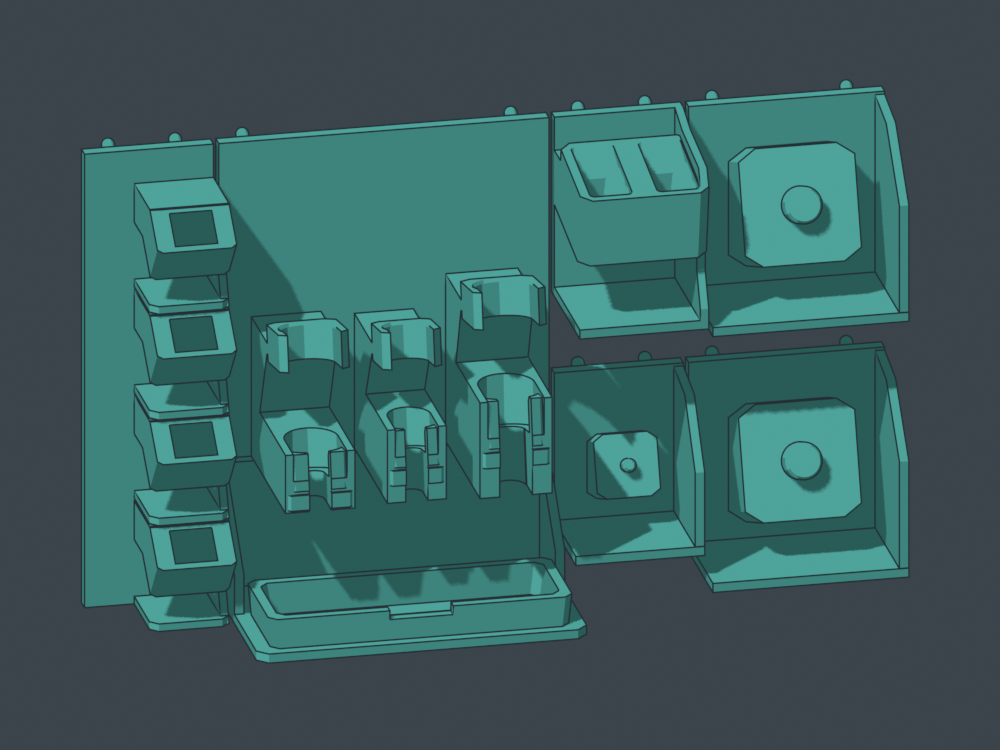
Installed empty parts and print-face overview
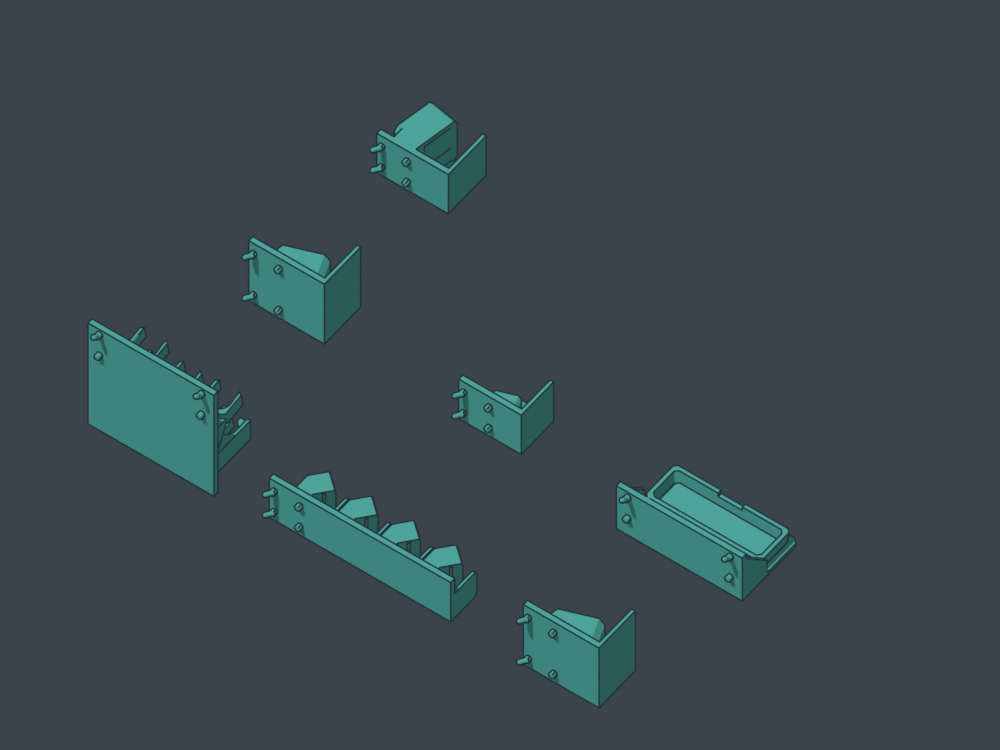
Individual modules
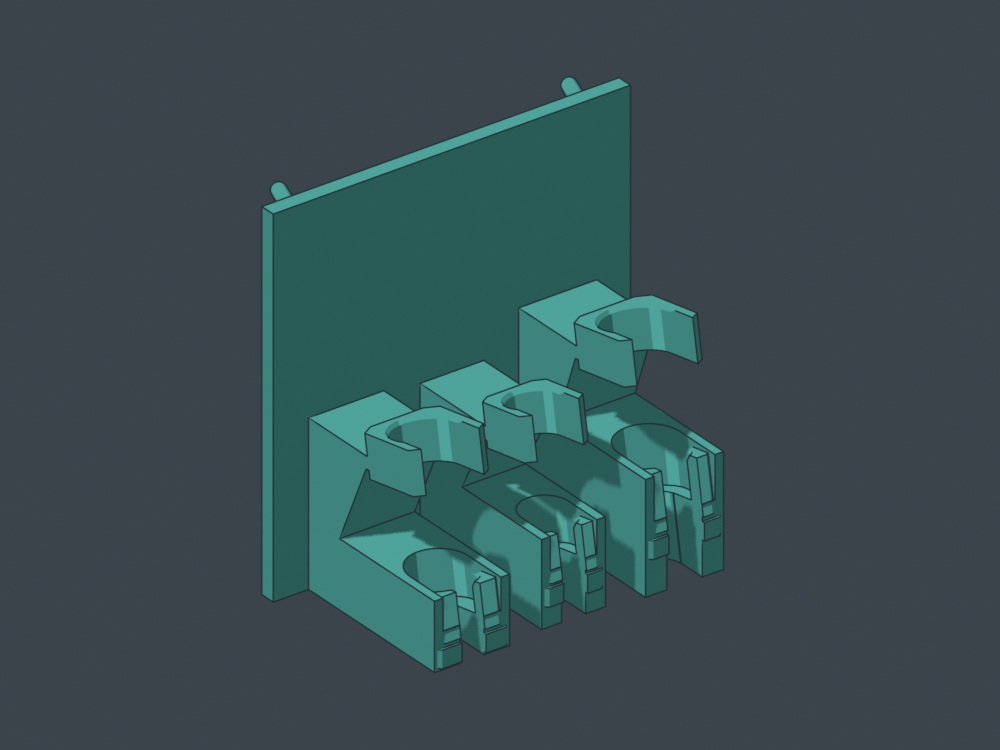
Three barrels
5 grid cells · 125.0 mm wide · Upright, flat base
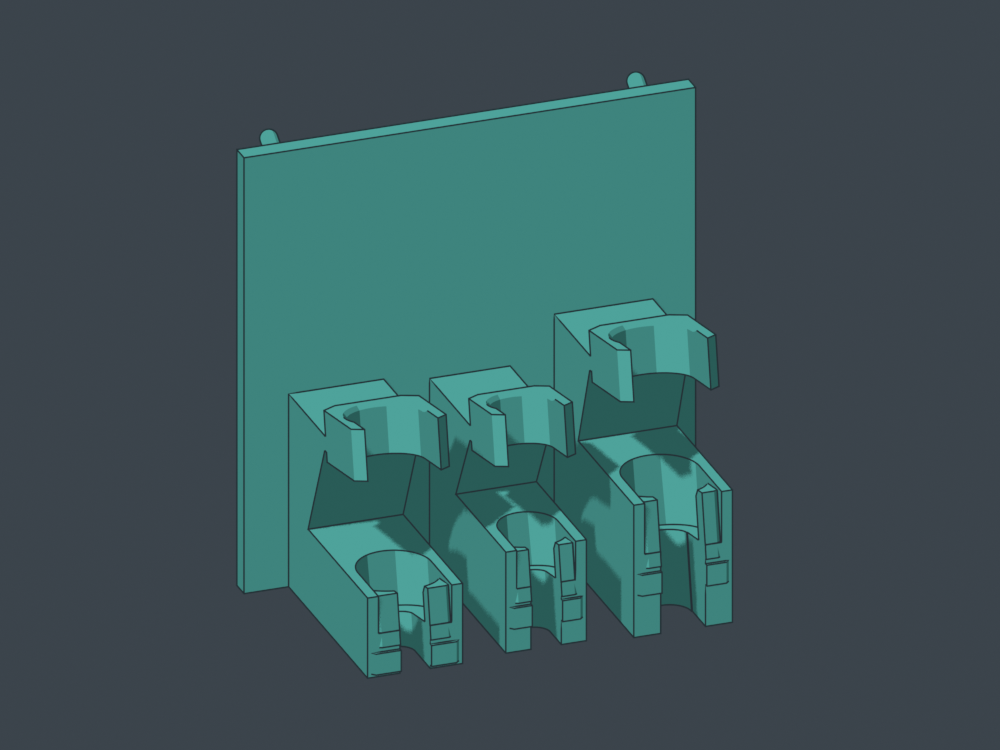
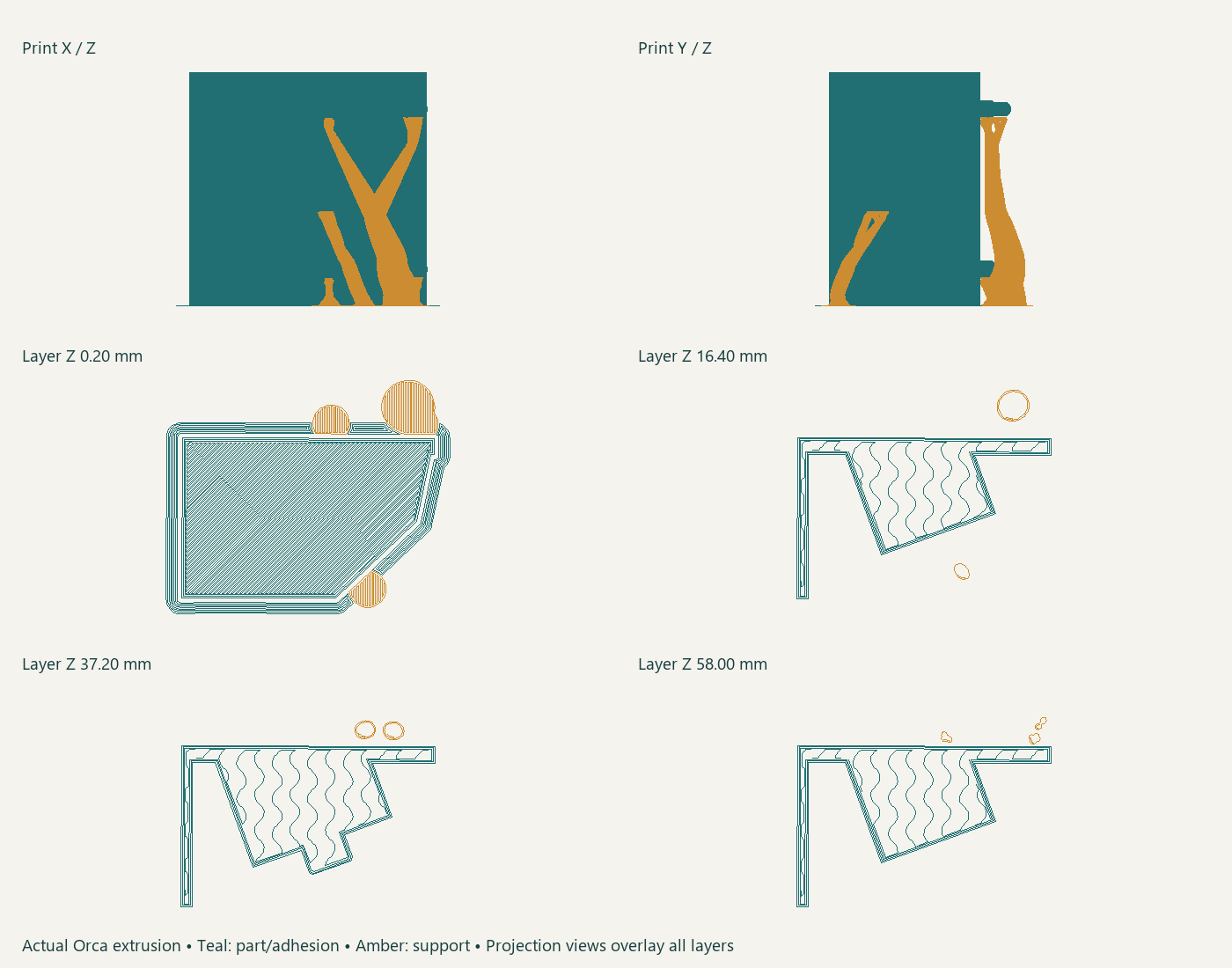
Print face and actual Orca supports
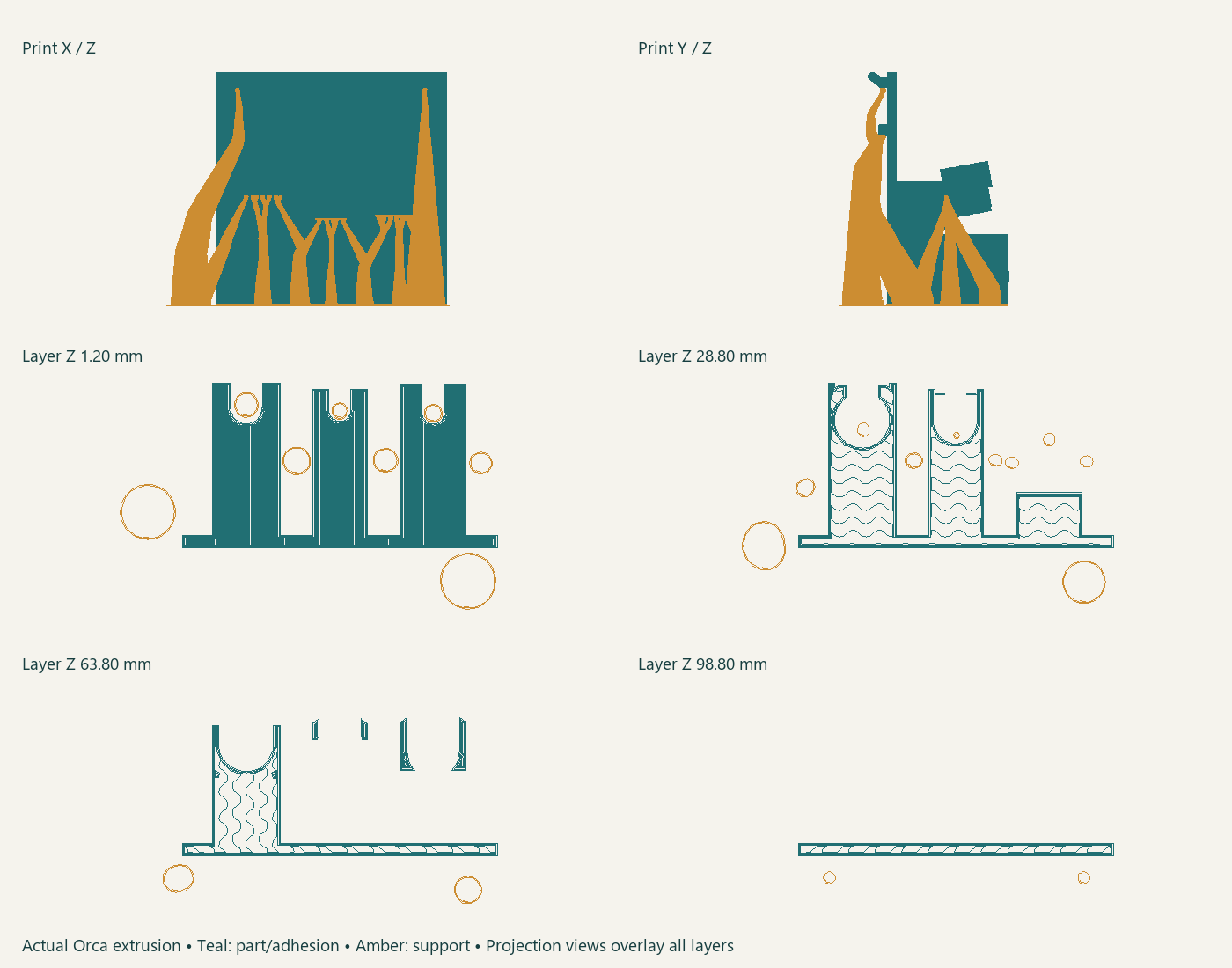
15.6 g estimated support. All supports start on the build plate. No mesh repairs; within P1S build area. This is a review slice, not a physically qualified result.
Slice reportFour tweezers · v7
2 cells · 48.8 mm wide · right cheek
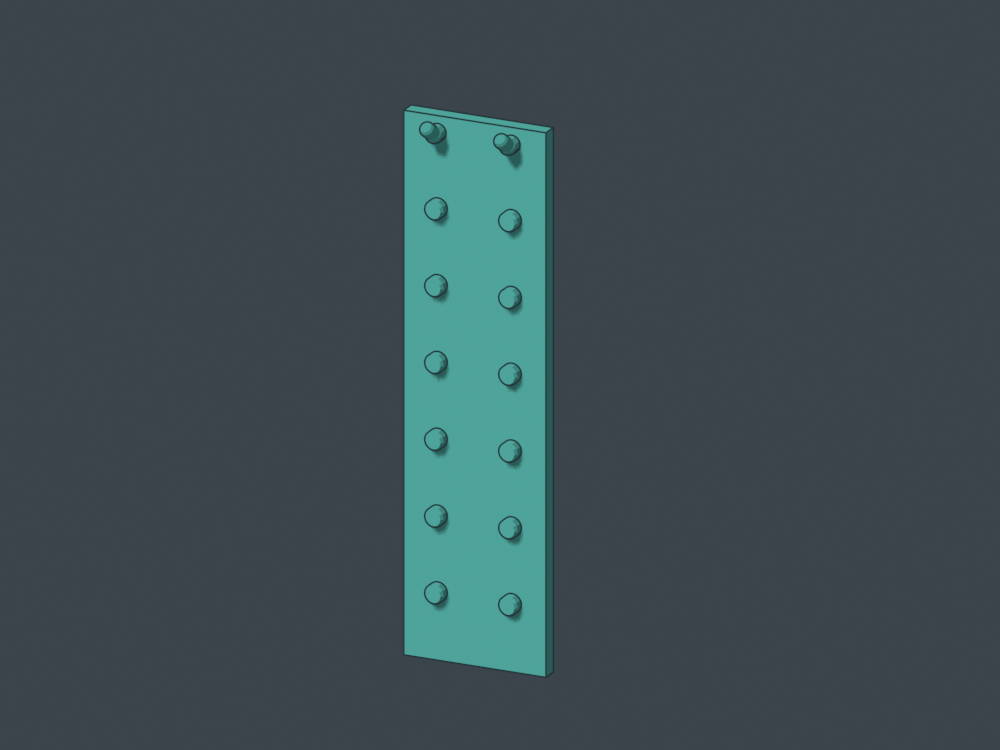
2 hooks + 12 tight straight locators. Ø6.45 mm, 0.10 mm nominal diametral interference. Tool seats unchanged. New physical-fit trial; v6 slices do not qualify it.
Rear view, print pose and mounting studyLarge solder reel
3 grid cells · 74.2 mm wide · Right cheek on bed
Print face and actual Orca supports
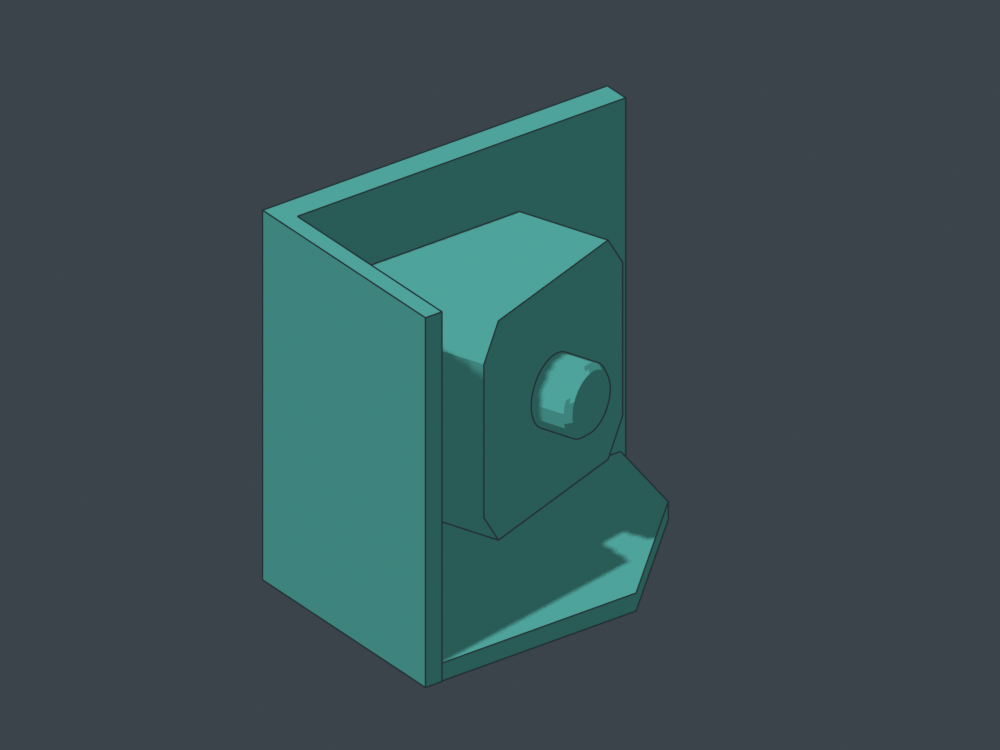
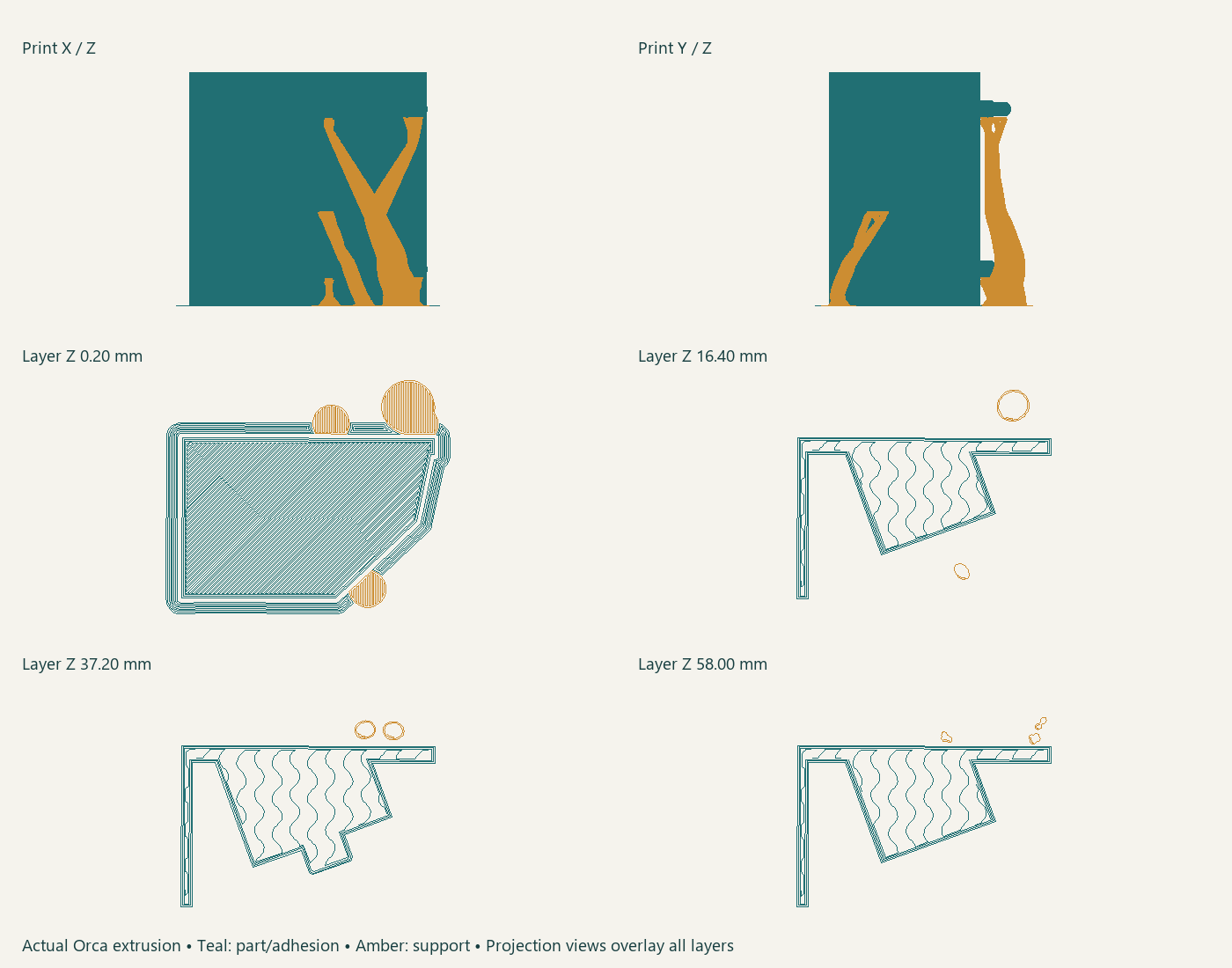
1.9 g estimated support. All supports start on the build plate. No mesh repairs; within P1S build area. This is a review slice, not a physically qualified result.
Slice reportSmall solder reel
3 grid cells · 74.2 mm wide · Right cheek on bed
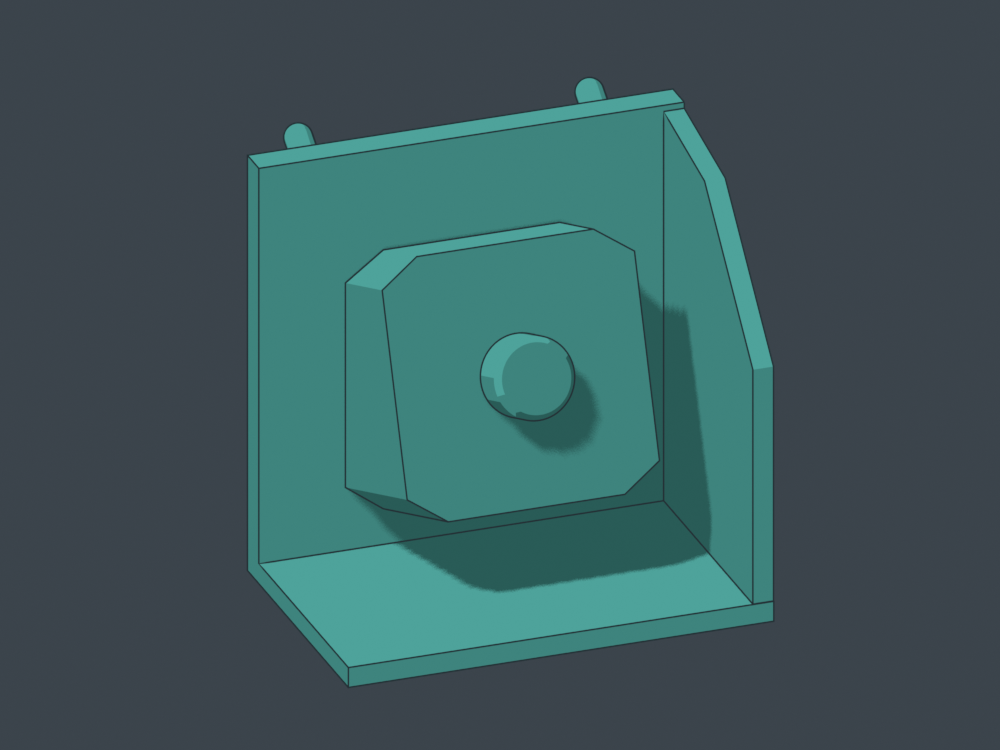
Print face and actual Orca supports
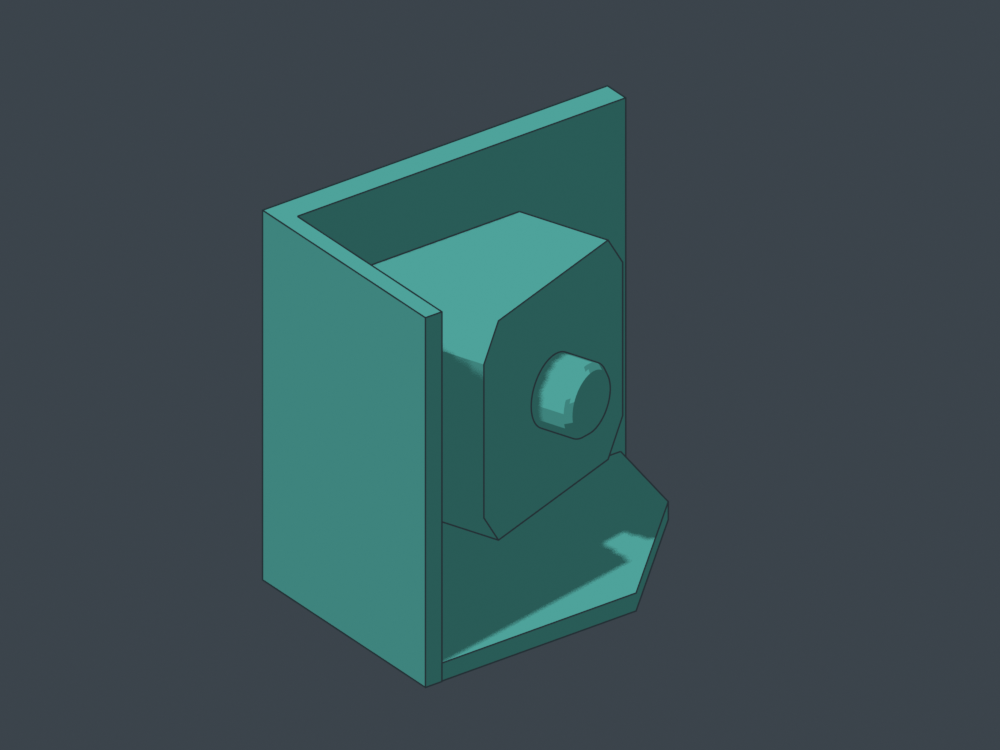
1.9 g estimated support. All supports start on the build plate. No mesh repairs; within P1S build area. This is a review slice, not a physically qualified result.
Slice reportBraid roll
2 grid cells · 48.8 mm wide · Right cheek on bed
Print face and actual Orca supports
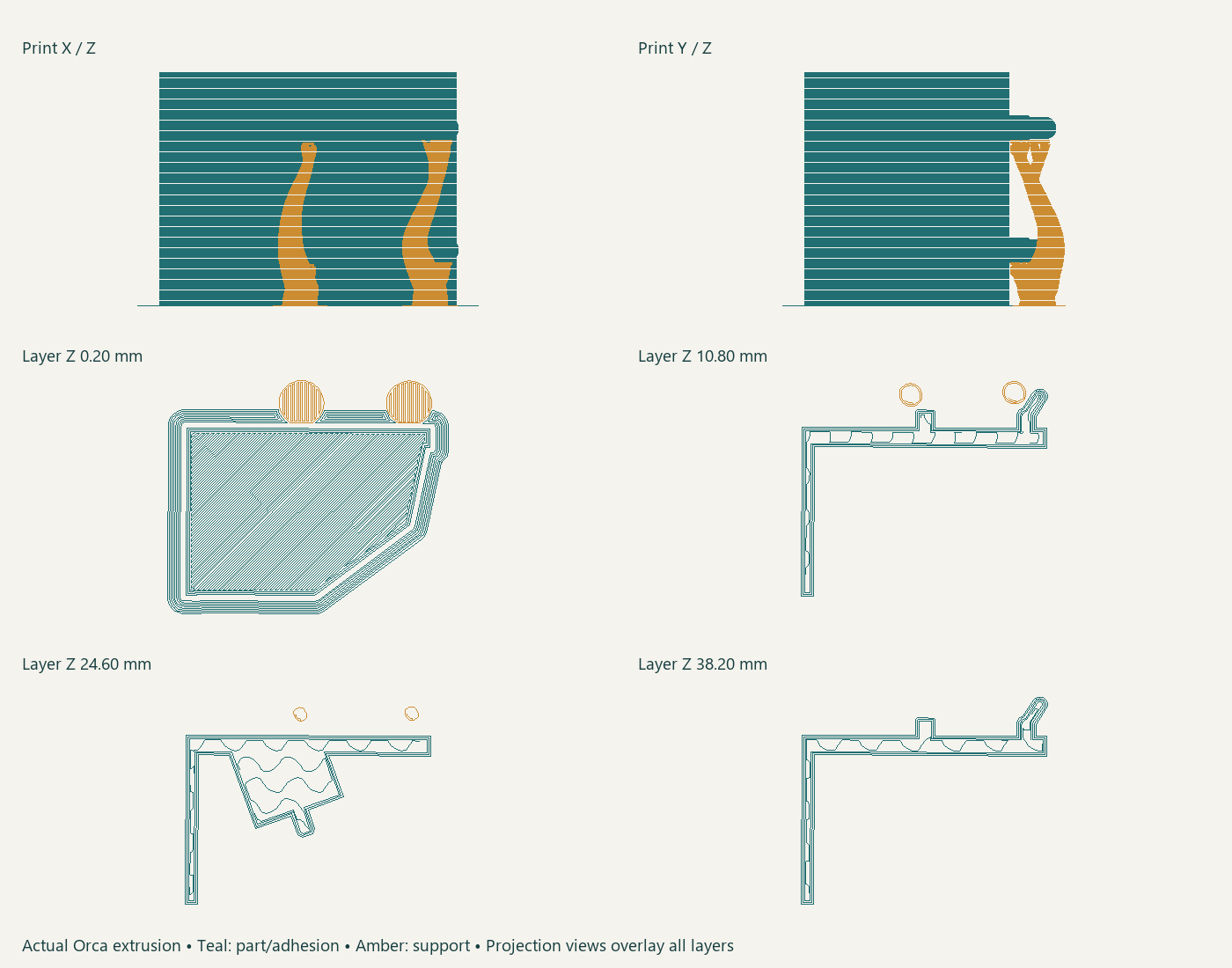
0.9 g estimated support. All supports start on the build plate. No mesh repairs; within P1S build area. This is a review slice, not a physically qualified result.
Slice reportRemovable drip tray
5 grid cells · 125.0 mm wide · Upright, flat base
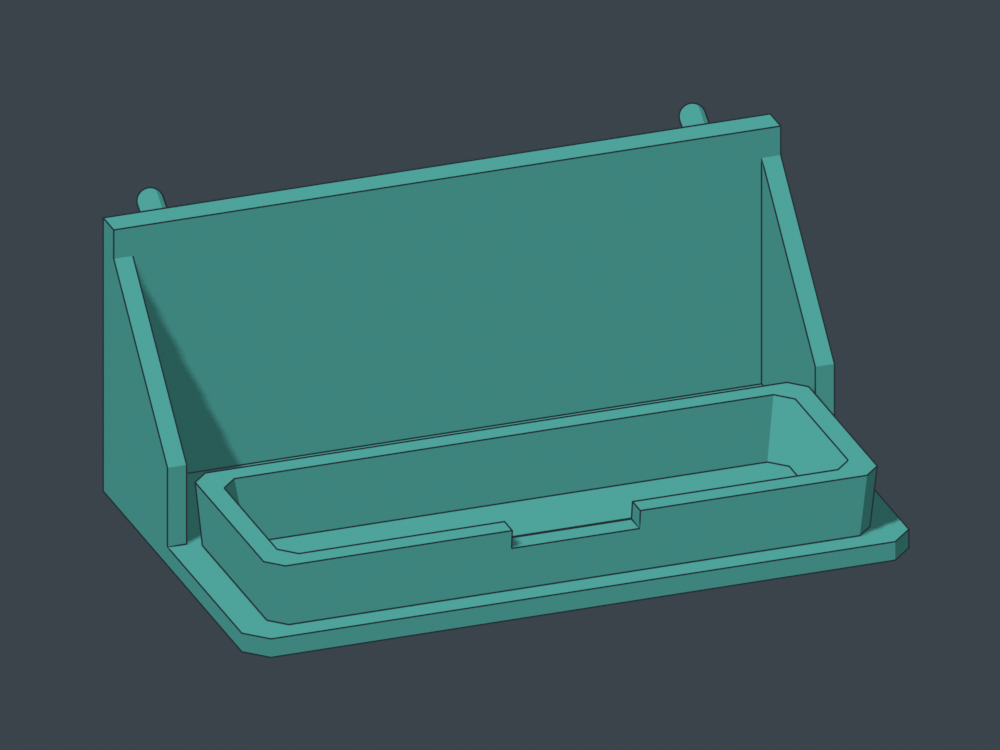
Print face and actual Orca supports
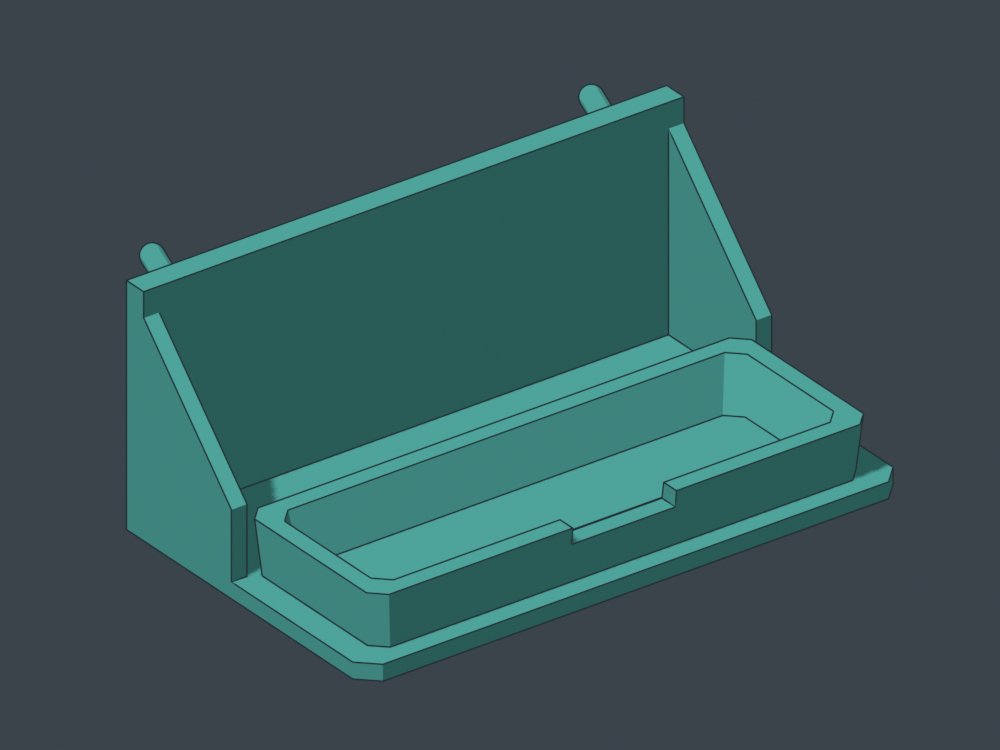
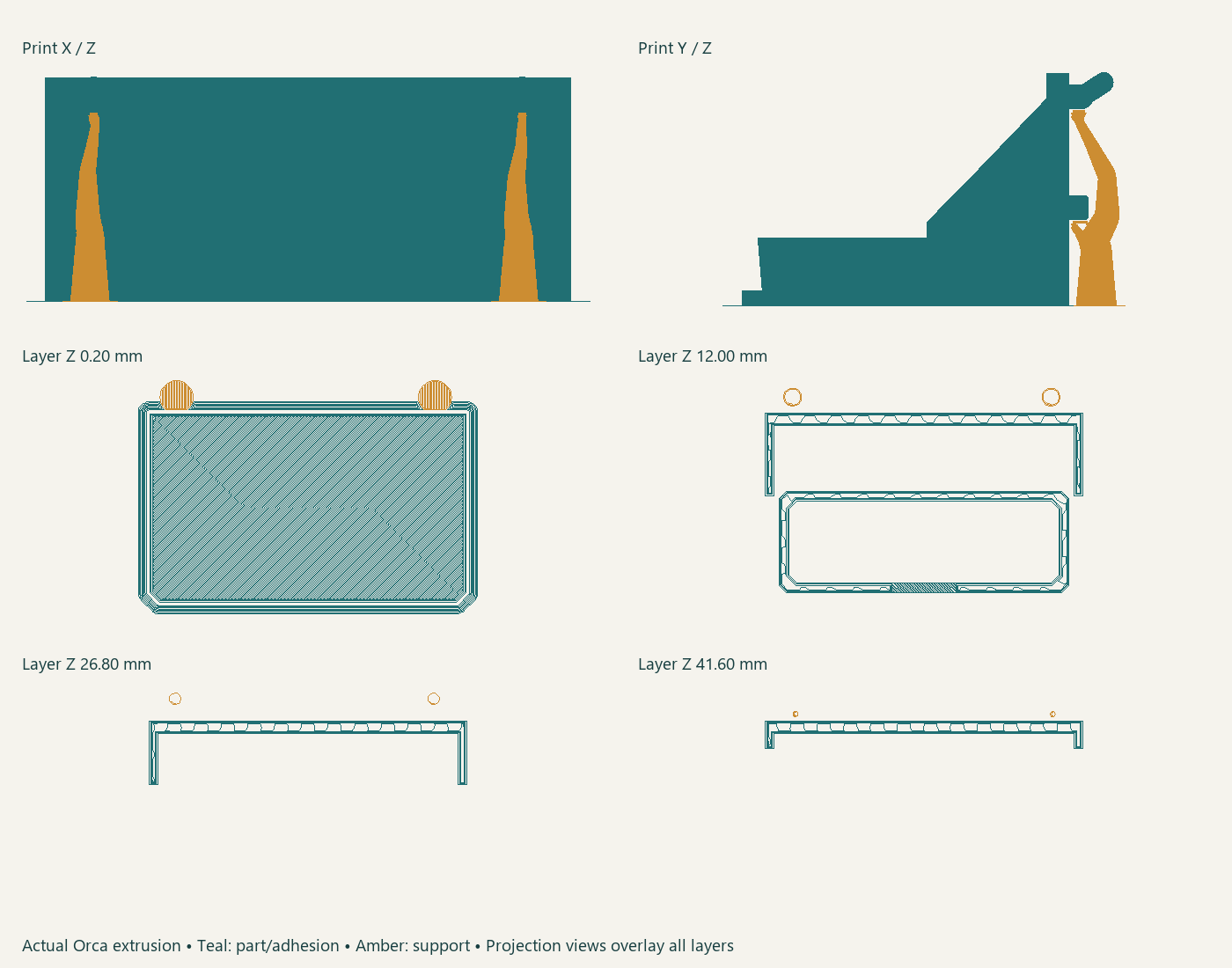
1.3 g estimated support. All supports start on the build plate. No mesh repairs; within P1S build area. This is a review slice, not a physically qualified result.
Slice reportSnips + small pliers
2 grid cells · 48.8 mm wide · Right cheek on bed
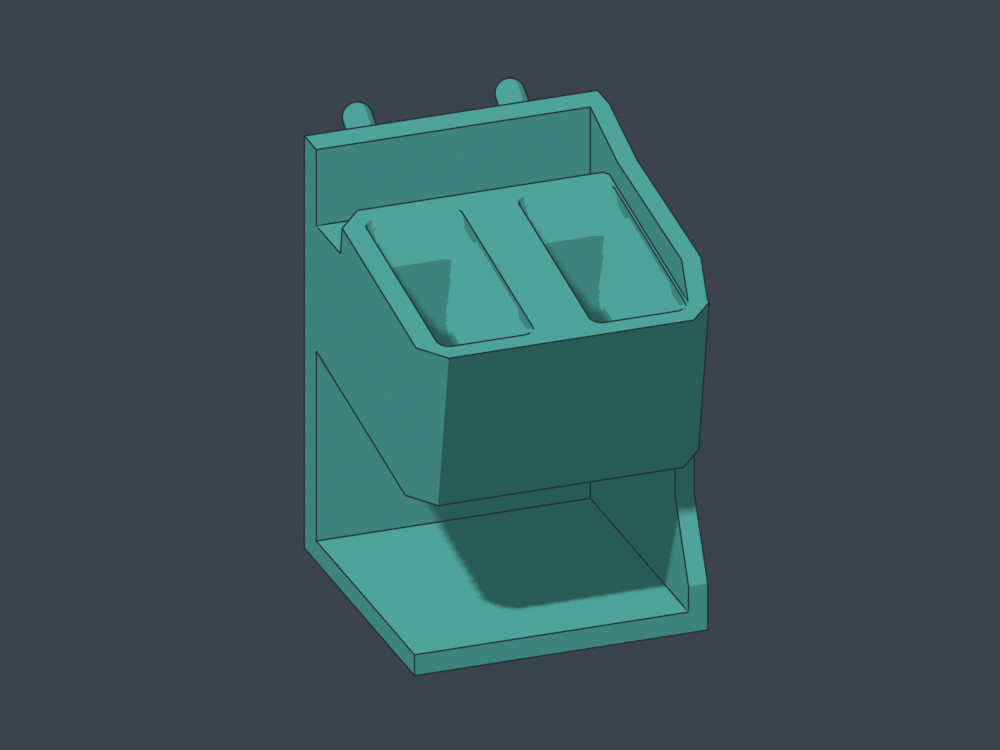
Print face and actual Orca supports
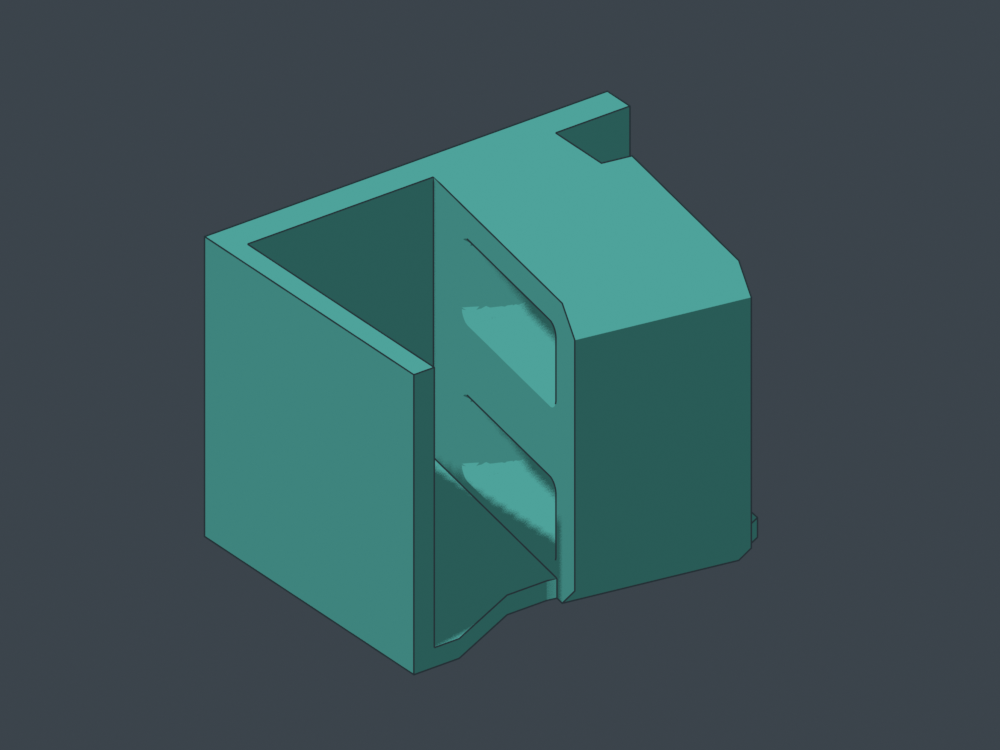
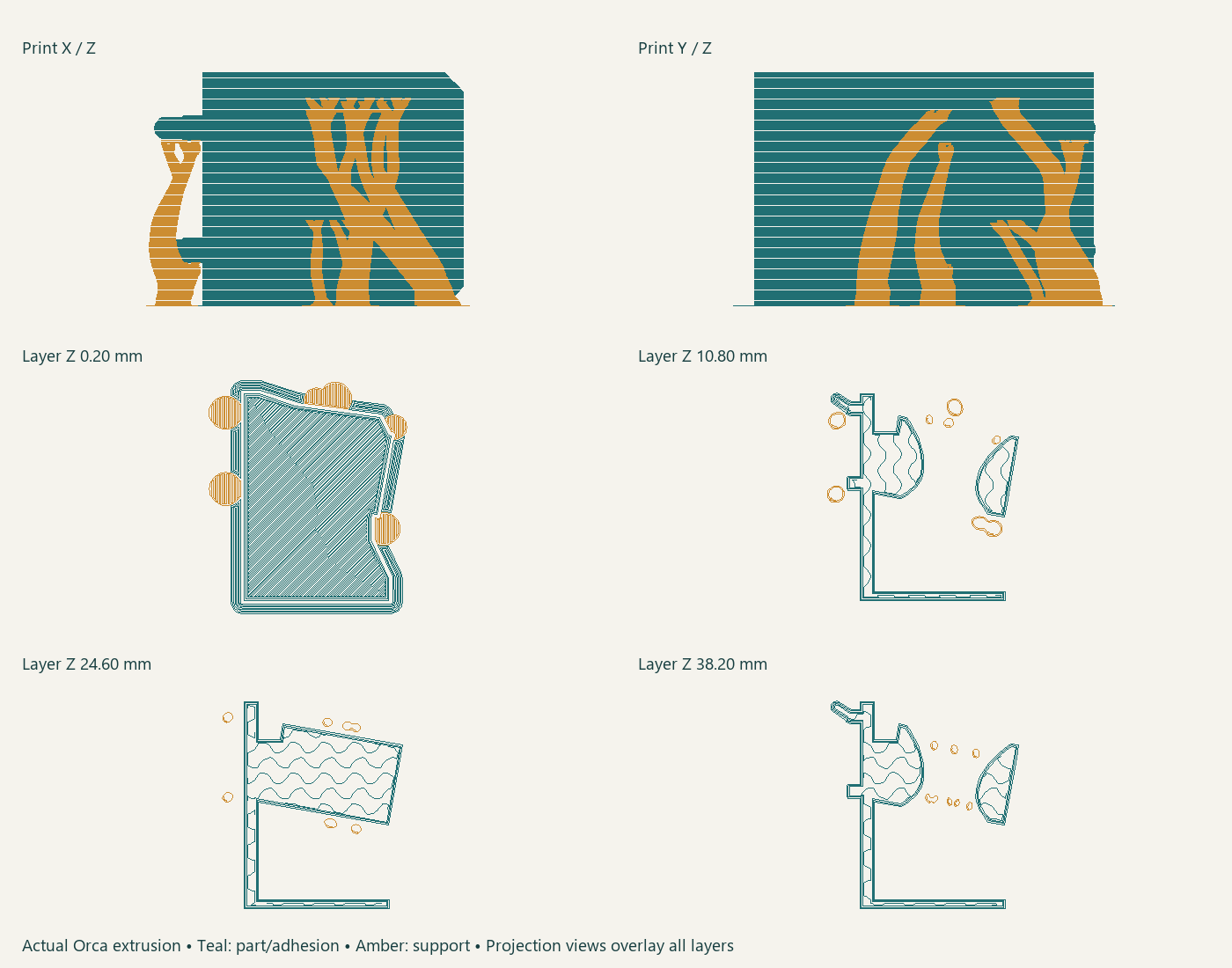
2.6 g estimated support. All supports start on the build plate. No mesh repairs; within P1S build area. This is a review slice, not a physically qualified result.
Slice reportDrip liner
The insert is the original 108 × 34 × 20 mm tapered vase-mode form, with a 102 × 28 mm base. The shorter receiving rim exposes the liner for grasping and clears the nozzle during removal. The filled vase source is intentionally different from the hollow visualization.
Rotate the installed arrangement
Access and peg checks · Dimensions and placement
To browse the extracted files locally, open index.html. For local 3D, run python3 serve-gallery.py. Assembly STEP is a positioning reference: print the individual modules. No current model was selected by reducing material at the expense of access.